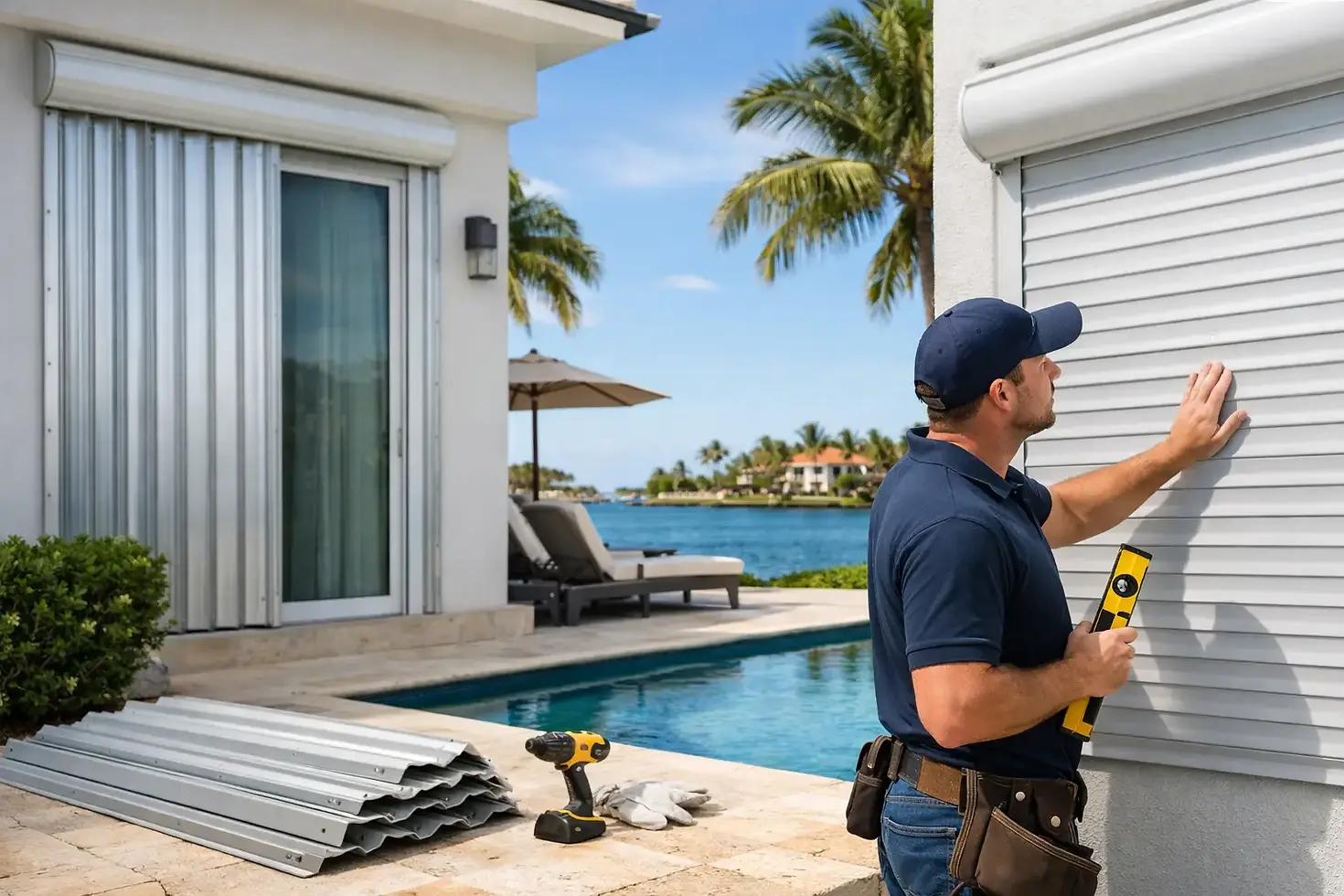
Choosing Palm Beach Hurricane Shutters Safely

Updated: Sep 9
A hurricane watch should not be the first time you find out whether your protection works. Palm Beach hurricane shutters give homeowners a practical way to protect windows, doors, and other vulnerable openings, but the right system is more than a set of panels stored in the garage. It must fit the opening, meet applicable Florida requirements, be properly anchored, and be ready to close when a storm is approaching.
For many homeowners, the challenge is sorting through product names, price ranges, and competing recommendations. Accordion shutters, roll-down shutters, Bahama shutters, and removable panels each solve a different problem. The best choice depends on your home’s layout, how often you use the property, your budget, and how much preparation you are willing to handle before a storm.
Why Hurricane Shutter Details Matter
Hurricane shutters are intended to protect glazed openings from windborne debris and, when properly rated for the opening and installation, help keep the home’s exterior envelope intact. If a window or glass door breaks during a storm, high winds can enter the house. That added pressure can contribute to serious damage inside the home and to the roof system.
A shutter system is only as dependable as its installation. The shutter itself may be approved, but the wrong fasteners, insufficient attachment points, improper tracks, or an unsuitable mounting surface can compromise its performance. This is why homeowners should look beyond a product brochure and ask how the system will be measured, permitted, mounted, and inspected.
Palm Beach County communities can have different local requirements, and Florida building standards apply to hurricane protection work. A knowledgeable contractor will verify the specific opening, product approval, mounting condition, and permit requirements instead of assuming one shutter design works everywhere.
Types of Palm Beach Hurricane Shutters
No single shutter is right for every house. A large sliding glass door has different needs than a small bathroom window, and a seasonal residence has different priorities than a full-time family home. These are the most common options homeowners compare.
Accordion Shutters
Accordion shutters stay attached beside the window or door and pull across on tracks when needed. They are a popular choice for homeowners who want permanent protection without removing and storing panels. For wide openings, they can be convenient and cost-effective compared with some motorized systems.
Their appearance is more visible than certain alternatives, and they need occasional cleaning and maintenance so the tracks, locks, and wheels operate properly. Quality installation matters especially on large openings, where alignment affects how easily the shutter closes.
Roll-Down Shutters
Roll-down shutters raise into a housing above the opening and lower when it is time to secure the home. They may be manually operated or motorized. Many homeowners appreciate the convenience, privacy, security, and added light control they can provide throughout the year.
They also tend to be one of the higher-cost options. Motorized models should have an appropriate plan for power loss, such as manual override capability or a compatible backup solution. The housing and guide tracks must be carefully integrated into the home’s exterior so the system operates smoothly and looks finished.
Bahama Shutters
Bahama shutters are permanently mounted, louvered shutters that prop open at an angle for shade and close over the window for storm protection. They can suit homeowners who value a tropical architectural look and want additional shade from direct sun.
The trade-off is that they can limit views or daylight depending on the louver style and position. They are also not ideal for every window location. A contractor should confirm the selected system is approved for the application, rather than treating a decorative shutter as hurricane protection.
Storm Panels and Colonial Shutters
Removable aluminum or clear panels are often a more budget-conscious approach. They can provide approved protection when installed correctly, but they require hands-on preparation before a storm and storage when not in use. Homeowners should consider whether they can safely install them, particularly for upper-story openings or large doors.
Colonial shutters offer a traditional look and hinge at the sides of the opening. Some systems are designed for storm use, while others are decorative. As with Bahama shutters, the product’s approval and installation method matter more than the style name.
How to Choose the Right Shutter System
Start by looking at the way you actually live in your home. If you travel during hurricane season or cannot easily install panels, permanent shutters may be worth the added investment. If you are protecting a secondary property, ease of deployment may be even more important because you may need to secure the home quickly before leaving town.
Next, consider the openings that need protection. Windows, entry doors with glass, French doors, sliding glass doors, sidelights, and certain garage openings may all need attention. Large openings often require more planning because the shutter span, mounting surface, and closure method need to support the system’s design pressure requirements.
Appearance also matters, especially on a home where shutters will remain visible year-round. The goal is not to choose the most expensive product automatically. It is to choose a code-appropriate system that you will be able to use reliably and that fits the home without creating unnecessary maintenance or visual concerns.
Permits, Product Approvals, and Installation
A clear proposal should explain what is included. Homeowners should know which openings are covered, the shutter type and finish, how the shutters will be mounted, whether permits are included, and who will coordinate inspections. Vague proposals make it difficult to compare estimates fairly.
Permitting is not just paperwork. It creates a documented process for confirming that the work follows applicable requirements. An inspection provides another checkpoint that the installation is completed as intended. Skipping these steps may create problems later when selling the home, making an insurance claim, or trying to verify that the protection was properly installed.
Before hiring a contractor, ask direct questions: Is the company licensed and insured? Is the quoted shutter system approved for my specific application? Who obtains the permit? Who will be onsite to oversee the work? How will existing stucco, trim, screens, or exterior finishes be handled? A professional contractor should answer plainly, without pressuring you into a decision.
At Premier Hurricane Solutions, the owner is a licensed Florida General Contractor who stays personally involved in projects. That owner-operated approach helps keep product selection, permitting, installation, inspections, and final completion connected instead of passing responsibility from one department to another.
Don’t Forget Maintenance and Storm Preparation
Permanent shutters still need attention. Before hurricane season, open and close each system, clear debris from tracks, check locks and fasteners, and look for corrosion or damage. If a shutter is difficult to operate under calm conditions, do not assume it will be easier when rain, wind, and time pressure are involved.
Keep any removable-panel hardware, wing nuts, instructions, and opening labels together in a dry, accessible location. It is also smart to photograph the completed shutters and keep permit and product documents with your home records. Those details can save time if you ever need service, documentation, or replacement components.
Do not wait for a named storm to schedule work. Demand can rise quickly once a system enters the forecast, while permitting and installation schedules may become more limited. Planning during the calmer part of the year gives you time to compare options without rushing a decision.
When Impact Windows May Be a Better Fit
Shutters are not the only path to hurricane protection. Impact-resistant windows and doors offer always-ready protection because the glazing is designed to resist impact and remain in place even if the outer layer cracks. They can also improve everyday comfort by reducing outside noise and helping manage solar heat gain, depending on the product selected.
That does not mean impact windows are automatically better for every home. They are usually a larger investment, particularly when replacing many openings, and installation must be precise. Some homeowners choose shutters for budget reasons, architectural preference, or targeted protection on particular openings. Others combine impact windows and doors with shutters where extra coverage or privacy is preferred.
A free estimate should help you compare these choices honestly. Ask for comparable scope and specifications when reviewing bids, not just a single bottom-line number. Financing can make a larger protection project more manageable, and a legitimate written estimate for comparable products and work should be evaluated carefully before you decide.
The right time to protect your home is while you can ask questions, review the plan, and choose a contractor who will be accountable after installation. A properly planned shutter project can replace storm-season uncertainty with a simple routine: close the system, secure the home, and focus on your family.


Comments